EXPLAINERUS-Iran diplomacy in a deadlock, but analysts say both sides are unlikely to return to fighting.A billboard of late Iranian Supreme Leader Ali Khamenei, who was killed on the first day of the US-Israel war on Iran, appears over Valiasr Square in Tehran, Iran [File: Abedin Taherkenareh/EPA]Published On 27 Apr 2026Tensions between the United States and Iran have reached another critical juncture. While a fragile ceasefire is holding, efforts to translate the nearly three-week truce into a permanent agreement appear to have stalled.Hopes of talks in the Pakistani capital, Islamabad, over the weekend dissipated after US President Donald Trump cancelled a visit by his envoys as both Iran and the US remain steadfast in their respective demands, especially over Tehran’s nuclear programme and control of the Strait of Hormuz.Recommended Stories list of 3 itemslist 1 of 3Satellite images show scale of Israeli destruction of south Lebanon townslist 2 of 3From Australia to Vietnam, the Iran war is fuelling demand for EVslist 3 of 3War and neglect fuel deadly measles epidemic in Sudan’s Darfurend of listIranian Foreign Minister Abbas Araghchi on Monday blamed the US for the failure of the talks. “US approaches caused the previous round of negotiations, despite progress, to fail to reach its goals because of the excessive demands,” he said during a visit to Russia.Yet experts said the impasse reflects a slowdown in negotiations rather than a collapse, citing plenty of examples in history that illustrate how diplomacy is rarely linear but is often marked by deadlocks, setbacks and backdoor engagement.So where do the talks stand now, and what could come next?What is the current status of talks?Trump on Saturday told reporters in Florida that he scrapped a visit by his top diplomatic envoy, Steve Witkoff, and son-in-law Jared Kushner to Pakistan because the talks involved too much travel and expense to consider an inadequate offer from the Iranians.The following day, Trump said Iran could telephone if it wanted to negotiate an end to the war that began on February 28 with the US-Israeli bombardment of Iran.“If they want to talk, they can come to us, or they can call us. You know, there is a telephone. We have nice, secure lines,” Trump told the US TV news channel Fox News.“They know what has to be in the agreement. It’s very simple: They cannot have a nuclear weapon. Otherwise, there’s no reason to meet.”Iran had already signalled its hesitation about participating in talks with the US. Officials in Tehran have said direct talks are pointless at the moment, citing US actions, such as its naval blockade of the Strait of Hormuz, as violations of the ceasefire and obstacles to meaningful dialogue.Iranian President Masoud Pezeshkian, in a conversation with Pakistani Prime Minister Shehbaz Sharif by phone on Saturday, said his country would not enter “imposed negotiations” under threats or blockade.Since early March, Iran essentially has shut down the Strait of Hormuz, through which a fifth of the world’s oil and natural gas supplies had passed before the war. Meanwhile, Washington imposed a naval blockade on Iranian ports and ships days after the ceasefire began on April 8.This has disrupted global oil supplies and contributed to rising prices. Countries around the world have been forced to seek alternative supplies and implement austerity measures to keep their economies afloat.Despite the breakdown in direct engagement, diplomacy continues via indirect channels. Iran has sent “written messages” to the US through Pakistani mediators outlining its red lines, including positions on nuclear issues and the Strait of Hormuz, Iran’s Fars News Agency said.At the same time, Araghchi has been engaged in an intense round of regional diplomacy, visiting Pakistan, Oman and Russia over the past three days.“It is a good opportunity for us to consult with our Russian friends about the developments that have occurred in relation to the war during this period and what is happening now,” Araghchi said in a video interview posted by Iran’s IRNA news agency from St Petersburg.Has US-Iran diplomacy failed?While the gulf between Tehran’s and Washington’s positions remains wide – Iran refuses to give up its nuclear programme, including uranium enrichment, which it insists is for peaceful purposes only – the ceasefire between the longtime foes is still largely holding, indicating that neither side is eager to return to a full-blown war.Emma Shortis, director of the Australia Institute’s International and Security Affairs Program, said despite the deadlock, there was “room for progress”. Meaningful diplomatic endeavours, she said, “take years to build”.“There has certainly been signalling that there might be room to move, particularly on the issue of uranium enrichment,” she told Al Jazeera. However, she warned that this was all subject to “volatile leaders” who are liable to “change their minds at the very last minute”.Trump also indicated over the weekend that cancelling talks does not necessarily mean a return to active fighting.On Sunday, he referenced a new Iranian proposal that he described as “a much better plan”, and there has been signalling that some flexibility may exist.Shortis said Trump was particularly under “enormous pressure” domestically because the war is “hugely” unpopular among Americans. “As the Strait of Hormuz remains effectively closed and affects gas prices in the US, the pressure will continue to build,” she said.Echoing Shortis, academic Rob Geist Pinfold said diplomacy has not failed but for the time being is coming up against “intractable divides” between the two sides.“The irony here is that neither side wants a return to war. No one wants another round of conflict,” Geist Pinfold, a lecturer at King’s College London, added.On Iran’s side, he said, the calculation is shaped by the damage it has already sustained. “Iran has had many of its assets degraded. Its military feels the need to recover. It wants some breathing space.”The US, meanwhile, is wary of being dragged back into a costly confrontation in the Gulf – in part because of Iran’s ability to exact a price on the region and the global economy.“Iran’s deterrent strategy worked. Iran managed to cause enough chaos to affect the global economy and global finances by hitting the Gulf states,” he said. “The US was disincentivised from carrying on the war.”The academic predicted that the current situation may solidify into a semipermanent ceasefire, one that is fragile but increasingly normalised.“Neither side feels like the other one has the upper hand, but they both feel like, ironically, they have the upper hand, so the result is this standoff of neither peace nor war.”That situation he said could endure for a long time. “This is a dynamic that can go on more or less indefinitely until one side manages to coerce the other into making a compromise,” he added.How have previous negotiations concluded?The 2015 Iran nuclear deal, formally known as the Joint Comprehensive Plan of Action (JCPOA), took roughly two years to negotiate successfully, including secret backchannel talks facilitated by Oman. Its eventual success came only after prolonged periods of deadlock and incremental progress. Trump abandoned the deal unilaterally in 2018 during his first term.“All major negotiations to end wars have their own peculiarities,” Chris Doyle, director of the London-based Council for Arab-British Understanding, told Al Jazeera, citing the example of the 1973 Paris Peace Accords between the US and Vietnam.“Here you see sides that were inimical to each other, trying to get a deal where the hostilities didn’t really end. There were huge differences as well,” he said. Negotiations leading to the accords began in 1968.
SRCAl Jazeera
LANGEN
LEANCenter
WORDS1 236
ENT9
MON · 2026-04-27 · 12:47 GMTBRIEF NSR-2026-0427-71954
NSR-2026-0427-71954News Report·EN·National Security
Have US-Iran talks failed? Why no deal yet doesn’t mean diplomacy is dead
US-Iran talks have stalled after a fragile ceasefire, with efforts to translate it into a permanent agreement failing to materialize. The negotiations, held in Islamabad, Pakistan, were cancelled by US President Donald Trump after he scrapped a visit by his envoys due to concerns over the cost and adequacy of an Iranian offer.
Usaid SiddiquiAl JazeeraFiled 2026-04-27 · 12:47 GMTLean · CenterRead · 5 min
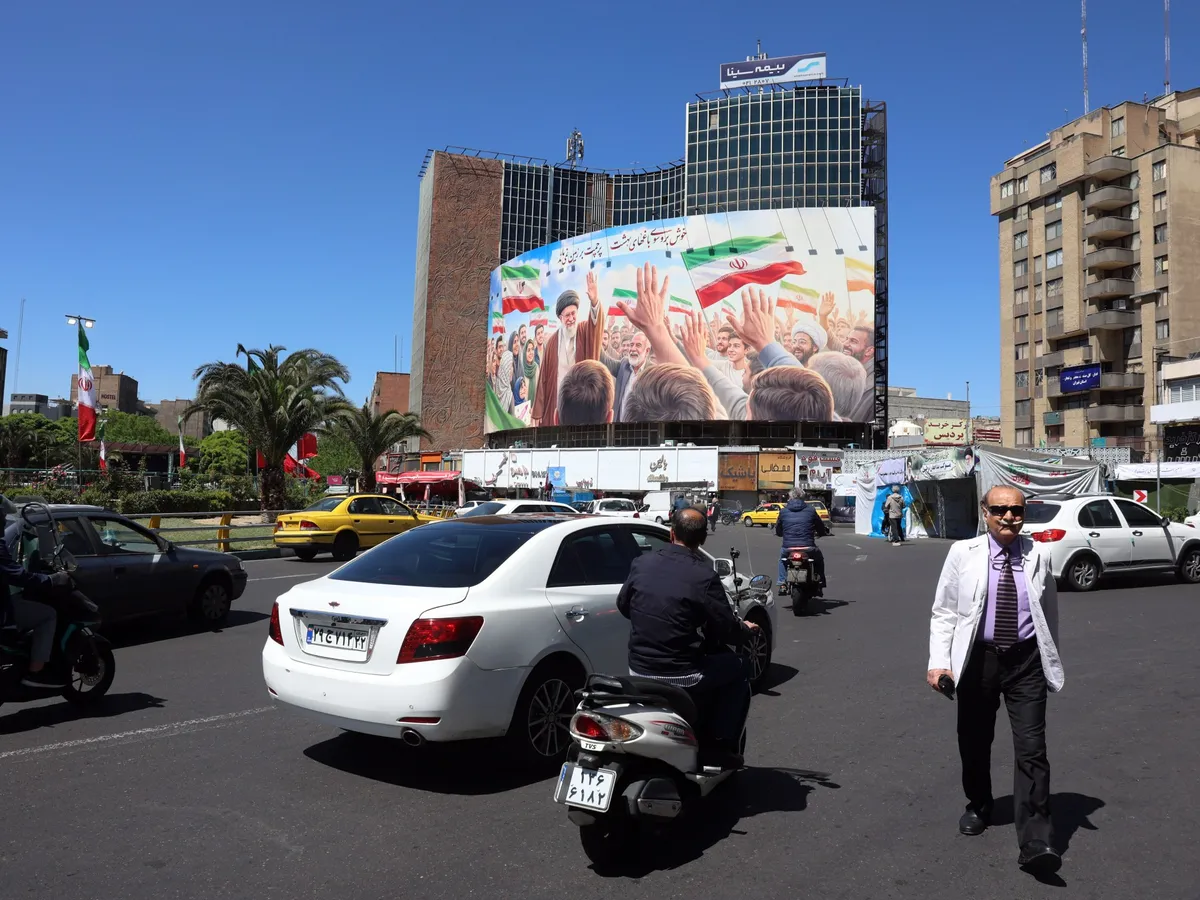
Al JazeeraFIG 01
Reading time
5min
Word count
1 236words
Sources cited
2cited
Entities identified
9entities
Quality score
100%
§ 01
Briefing Summary
AI-generatedNEWSAR · AI
US-Iran talks have stalled after a fragile ceasefire, with efforts to translate it into a permanent agreement failing to materialize. The negotiations, held in Islamabad, Pakistan, were cancelled by US President Donald Trump after he scrapped a visit by his envoys due to concerns over the cost and adequacy of an Iranian offer. Iranian Foreign Minister Abbas Araghchi blamed the US for the failure, citing excessive demands from Washington. However, experts say the impasse reflects a slowdown in negotiations rather than a collapse, with diplomacy often marked by deadlocks and setbacks. Trump has offered Iran the opportunity to negotiate via telephone or in-person talks, emphasizing that a nuclear weapon is non-negotiable. The talks' current status remains uncertain, leaving questions about what could come next.
Confidence 0.90Sources 2Claims 3Entities 9
§ 02
Article analysis
Model · rule-basedFraming
National Security
Tone
Measured
AI-assessed
CalmNeutralAlarmist
Factuality
0.90 / 1.00
Factual
LowHigh
Sources cited
2
Limited
FewMany
§ 03
Key claims
3 extracted01
Iran has essentially shut down the Strait of Hormuz since early March due to US naval blockade.
statistic
Confidence
1.00
02
US President Donald Trump said Iran can call him or his administration if it wants to negotiate an end to the war, but only under certain conditions.
quoteDonald Trump
Confidence
1.00
03
Iranian Foreign Minister Abbas Araghchi said US approaches caused the previous round of negotiations to fail due to excessive demands.
quoteAbbas Araghchi
Confidence
1.00
§ 04
Full report
5 min read · 1 236 words§ 05
Entities
9 identifiedKey playerOppositionContextPositiveNeutralNegative
People5
§ 06
Keywords & salience
7 termsisrael-iran war
0.90
us-iran talks
0.90
nuclear weapon
0.80
iran nuclear programme
0.80
diplomacy
0.70
strait of hormuz
0.60
ceasefire
0.50
§ 07
Topic connections
Interactive graph Network visualization showing 51 related topics
View Full Graph Person Organization Location Event|Click node to navigate|Edge numbers = shared articles