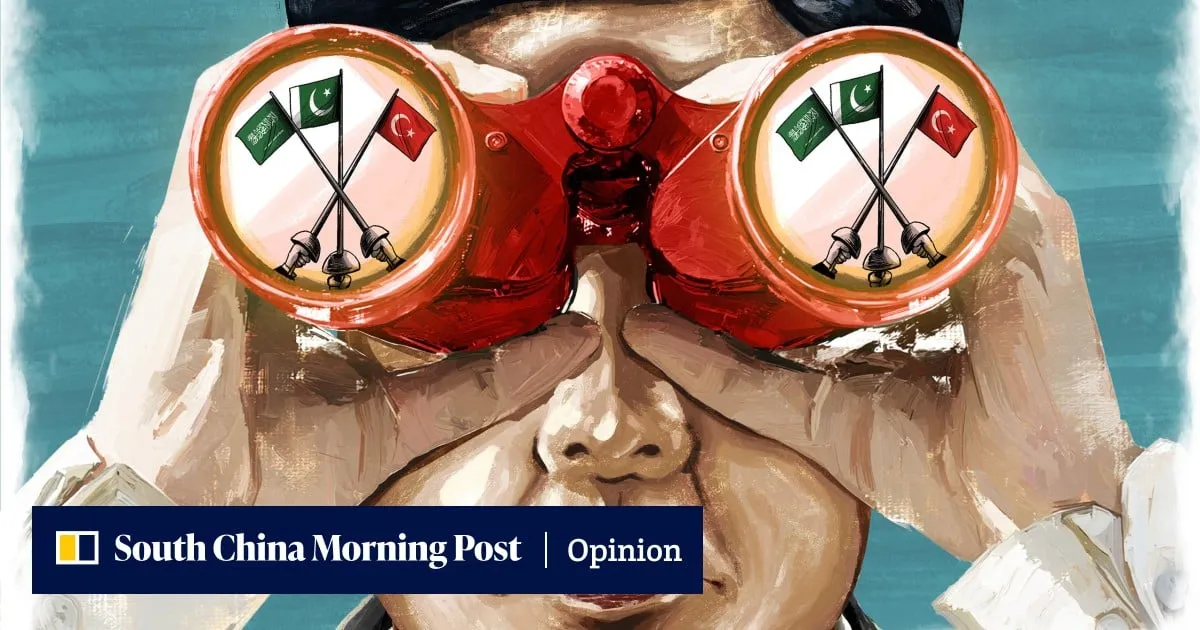
When Saudi Crown Prince Mohammed bin Salman, Turkish President Recep Tayyip Erdogan, and Pakistani Prime Minister Shehbaz Sharif signed the Mecca defence agreement, they executed a structural overhaul of the Middle East’s security architecture.The pact codifies a defence commitment, where an armed attack on one is treated as an assault on all. Building upon September’s Saudi-Pakistan defence agreement, this tripartite arrangement bridges the financial capital of the Gulf, the industrial-military muscle of a NATO member and the operational capacity of a South Asian nuclear-armed state.This pact was birthed by acute vulnerabilities and a crisis of confidence in Western security guarantees. For Riyadh, it is an insurance policy for Vision 2030, safeguarding giga-projects and energy arteries against regional volatility, Iran-backed Houthi maritime disruptions and unpredictable American foreign policy.For Ankara, it is the ultimate vehicle to project power across the Islamic world under its “Asia Anew Initiative”, expanding its defence export footprint, anchored by Bayraktar drones and fifth-generation Kaan fighter jets. For Islamabad, it secures Gulf financial lifelines and energy supplies, while elevating its military elite to indispensable regional power brokers.Ideologically and geopolitically, the Mecca pact represents a pragmatic realignment towards regional self-reliance. While some observers label it an “Islamic NATO”, the comparison is functionally flawed.Unlike the transatlantic security alliance, which relies on a rigid, institutionalised command structure, integrated command hubs and shared doctrine under American hegemony, the Mecca pact is seen to be operating as a flexible, transactional strategic coalition. It lacks a permanent bureaucratic headquarters, relying instead on state-to-state defence integration, intelligence sharing and defence-industrial co-development.
SRCSouth China Morning Post
LANGEN
OutletPrivately owned · Hong Kong
WORDS256
ENT12
THU · 2026-08-13 · 21:30 GMTBRIEF NSR-2026-0813-102087
NSR-2026-0813-102087Analysis·EN·Political Strategy
What the Mecca military pact means for China
Saudi Crown Prince Mohammed bin Salman, Turkish President Recep Tayyip Erdogan, and Pakistani Prime Minister Shehbaz Sharif have signed a defense agreement in Mecca. This pact establishes a collective defense commitment, treating an attack on one signatory as an attack on all, and represents a significant shift in the Middle East's security landscape.
Ronny P. SasmitaSouth China Morning PostFiled 2026-08-13 · 21:30 GMTOutlet · Privately owned · Hong KongRead · 2 min
South China Morning PostFIG 01
Reading time
2min
Word count
256words
Sources cited
0cited
Entities identified
12entities
NEWSAR · AI
Saudi Crown Prince Mohammed bin Salman, Turkish President Recep Tayyip Erdogan, and Pakistani Prime Minister Shehbaz Sharif have signed a defense agreement in Mecca. This pact establishes a collective defense commitment, treating an attack on one signatory as an attack on all, and represents a significant shift in the Middle East's security landscape. The agreement aims to address vulnerabilities and a perceived lack of Western security guarantees. For Saudi Arabia, it secures its Vision 2030 projects and energy routes. Turkey seeks to expand its influence and defense exports, while Pakistan gains financial and energy security and regional influence. Unlike NATO, this pact is described as a flexible, transactional strategic coalition based on state-to-state cooperation rather than a rigid, institutionalized structure.
Confidence 0.90Claims 5Entities 12
Framing
Political Strategy
Diplomatic
Tone
Measured
AI-assessed
CalmNeutralAlarmist
Factuality
0.60 / 1.00
Mixed
LowHigh
Sources cited
0
No named sources
FewMany
01
The Mecca pact codifies a defense commitment where an armed attack on one is treated as an assault on all.
factual
Confidence
0.90
02
For Riyadh, it is an insurance policy for Vision 2030, safeguarding giga-projects and energy arteries against regional volatility, Iran-backed Houthi maritime disruptions and unpredictable American foreign policy.
factual
Confidence
0.80
03
The pact bridges the financial capital of the Gulf, the industrial-military muscle of a Nato member, and the operational capacity of a South Asian nuclear-armed state.
factual
Confidence
0.80
04
The Mecca pact represents a pragmatic realignment towards regional self-reliance.
factual
Confidence
0.70
05
The pact was birthed by acute vulnerabilities and a crisis of confidence in Western security guarantees.
factual
Confidence
0.70
§ 04
Full report
2 min read · 256 wordsKey playerOppositionContextPositiveNeutralNegative
People3
Organizations1
Locations6
Topics1
mecca military pact
1.00
security architecture
0.90
regional self-reliance
0.80
defence commitment
0.70
strategic coalition
0.60
western security guarantees
0.50
asia anew initiative
0.40
vision 2030
0.40
§ 07
Connections
Who appears together in the newsIn this articleWider coverageLine weight = articles in common
Laying out network…
Strongest ties articles in common
- 12,267
- 2,077
- 1,810
- 1,279
- 1,231
- 1,112
Recurring context not named in this article
- LTehranlinks 10
- LIsraellinks 10
- PDonald Trumplinks 10
- LStrait of Hormuzlinks 10
- LQatarlinks 10
- LChinalinks 10
- LLebanonlinks 10
- LFrancelinks 10