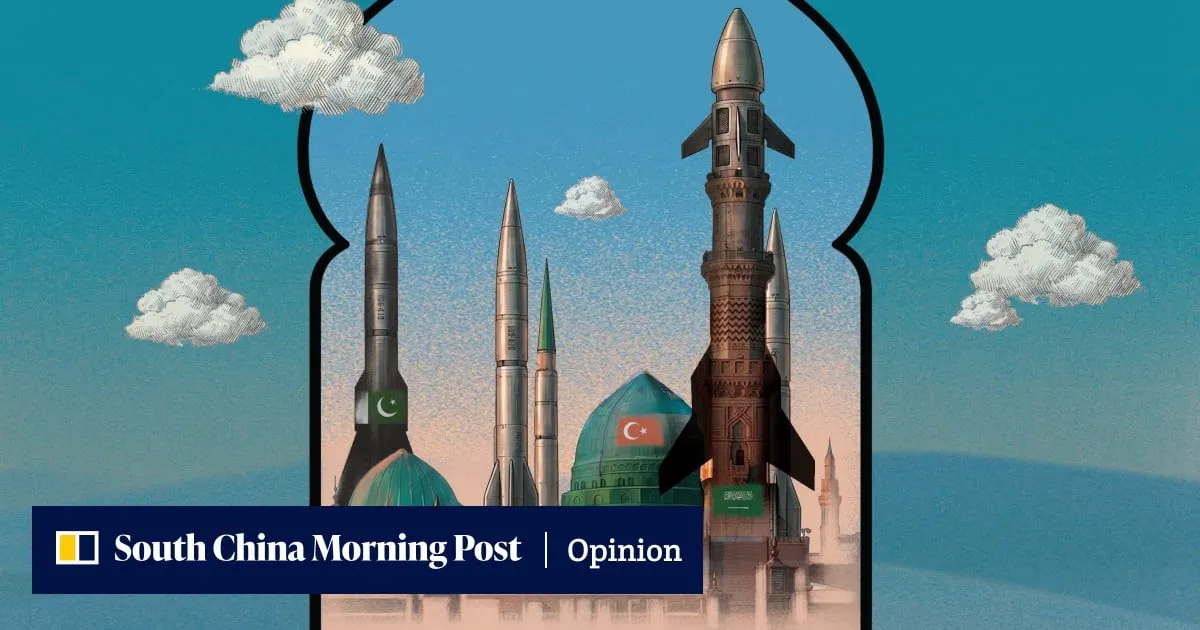
The Mecca security pact between Saudi Arabia, Turkey and Pakistan stipulates that an armed attack against one shall count as an attack against all three. Yet the real message is directed at the United States: if being an American ally offers no immunity against attack, there is little point in waiting for Washington to honour its security guarantees.That there has been no official White House statement casts some doubt on whether Donald Trump is really “very happy to see that Saudi Arabia, Turkey and Pakistan have recently, and finally, signed the Mecca-joint-defence-agreement" class="entity-link entity-event" data-entity-id="180845" data-entity-type="event">Mecca Joint Defence Agreement”, as the US president wrote on social media. “It shows that the Middle East is coming together and how countries will finally be able to defend themselves in a more meaningful way.”Superficially, the needs of the three nations are complementary: wealthy Saudi Arabia lacks military capacity, Turkey harbours ambitions across Eurasia and nuclear-armed Pakistan seeks financial support. Their strengths fit neatly together, cemented by a shared Sunni faith.
SRCSouth China Morning Post
LANGEN
OutletPrivately owned · Hong Kong
WORDS163
ENT10
TUE · 2026-08-25 · 12:30 GMTBRIEF NSR-2026-0825-105753
NSR-2026-0825-105753Analysis·EN·Political Strategy
Could Mecca defence pact be first step to new Middle East order?
Saudi Arabia, Turkey, and Pakistan have signed the Mecca Joint Defence Agreement, which states that an armed attack against one will be considered an attack against all three. This pact is interpreted as a message to the United States, suggesting that if American allies are not immune from attack, there is little incentive to rely on Washington's security guarantees.
Zhou BoSouth China Morning PostFiled 2026-08-25 · 12:30 GMTOutlet · Privately owned · Hong KongRead · 1 min
South China Morning PostFIG 01
Reading time
1min
Word count
163words
Sources cited
1cited
Entities identified
10entities
NEWSAR · AI
Saudi Arabia, Turkey, and Pakistan have signed the Mecca Joint Defence Agreement, which states that an armed attack against one will be considered an attack against all three. This pact is interpreted as a message to the United States, suggesting that if American allies are not immune from attack, there is little incentive to rely on Washington's security guarantees. The article notes the absence of an official White House statement, casting doubt on President Trump's reported enthusiasm for the agreement. The pact's formation appears to align the complementary needs of the three nations: Saudi Arabia's wealth, Turkey's Eurasian ambitions, and Pakistan's nuclear capability and need for financial support, all united by shared Sunni faith.
Confidence 0.90Sources 1Claims 5Entities 10
Framing
Political Strategy
Diplomatic
Tone
Mixed Tone
AI-assessed
CalmNeutralAlarmist
Factuality
0.40 / 1.00
Mixed
LowHigh
Sources cited
1
Limited
FewMany
01
The pact shows that the Middle East is coming together and countries will finally be able to defend themselves in a more meaningful way.
quoteDonald Trump
Confidence
1.00
02
Donald Trump wrote on social media that he was 'very happy to see that Saudi Arabia, Turkey and Pakistan have recently, and finally, signed the Mecca Joint Defence Agreement'.
quoteDonald Trump
Confidence
1.00
03
The Mecca security pact between Saudi Arabia, Turkey and Pakistan stipulates that an armed attack against one shall count as an attack against all three.
factual
Confidence
0.90
04
The needs of Saudi Arabia, Turkey, and Pakistan are complementary: Saudi Arabia lacks military capacity, Turkey harbours ambitions across Eurasia, and Pakistan seeks financial support.
factual
Confidence
0.80
05
The real message of the pact is directed at the United States.
factual
Confidence
0.70
§ 04
Full report
1 min read · 163 wordsKey playerOppositionContextPositiveNeutralNegative
Locations8
mecca defence pact
1.00
middle east order
0.90
turkey
0.80
saudi arabia
0.80
pakistan
0.80
united states
0.70
security guarantees
0.60
donald trump
0.50
sunni faith
0.40
§ 07
Connections
Who appears together in the newsIn this articleWider coverageLine weight = articles in common
Laying out network…
Strongest ties articles in common
- 15,001
- 1,810
- 1,409
- 1,231
- 1,179
- 990